


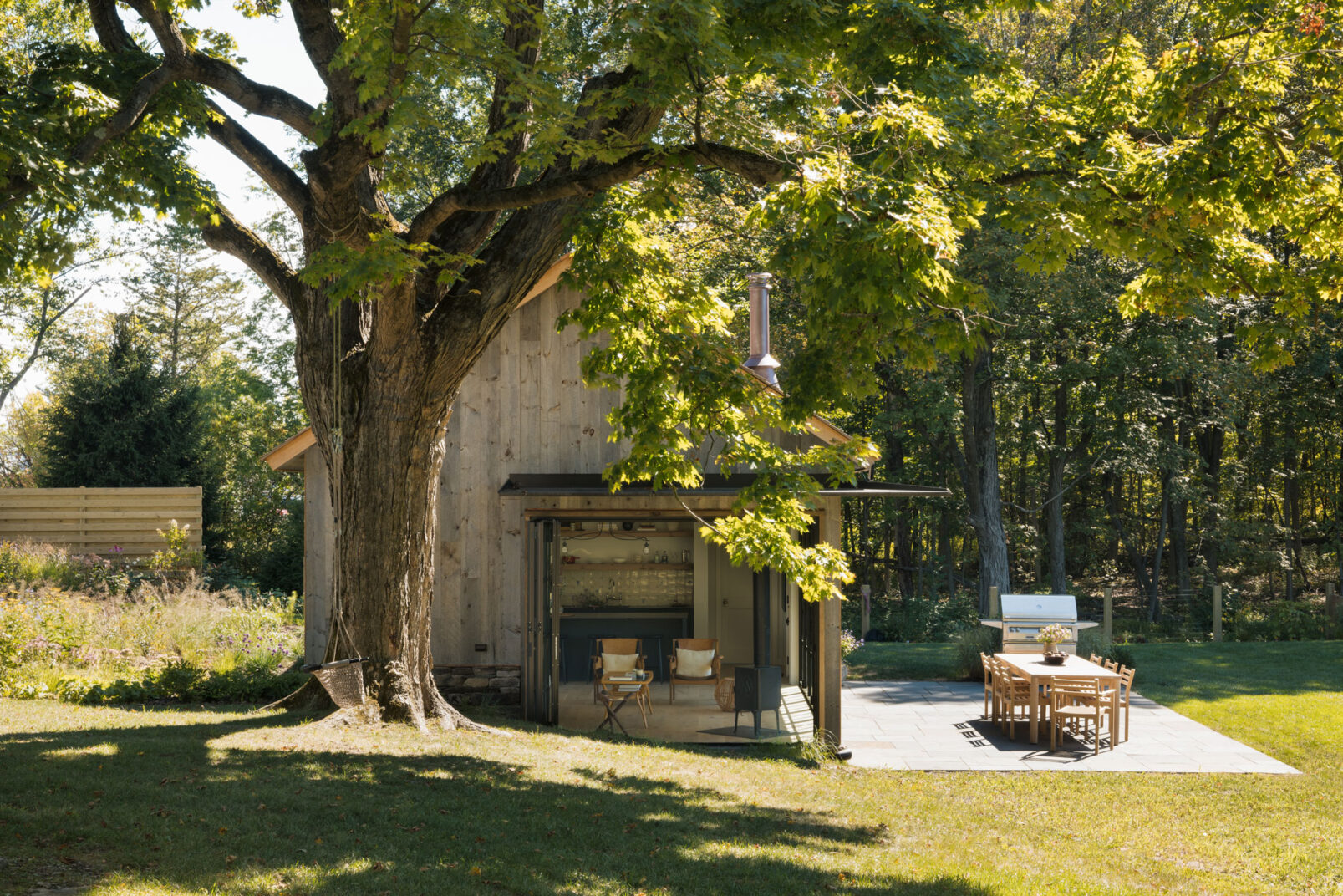





Located on a long, narrow property in Columbia County, the Germantown cottage sits between residential and commercial uses, with open meadows to the south and expansive views of the Catskill Mountains across the Hudson River to the west. The work centers on the introduction of a year-round guest house that completes a compound of existing buildings, organizing the site around a clearly defined outdoor room. By positioning the new structure to shape the southern edge of the courtyard and opening it toward the surrounding landscape, the project establishes a cohesive relationship between architecture, landscape, and view while reinforcing a sense of privacy and enclosure.
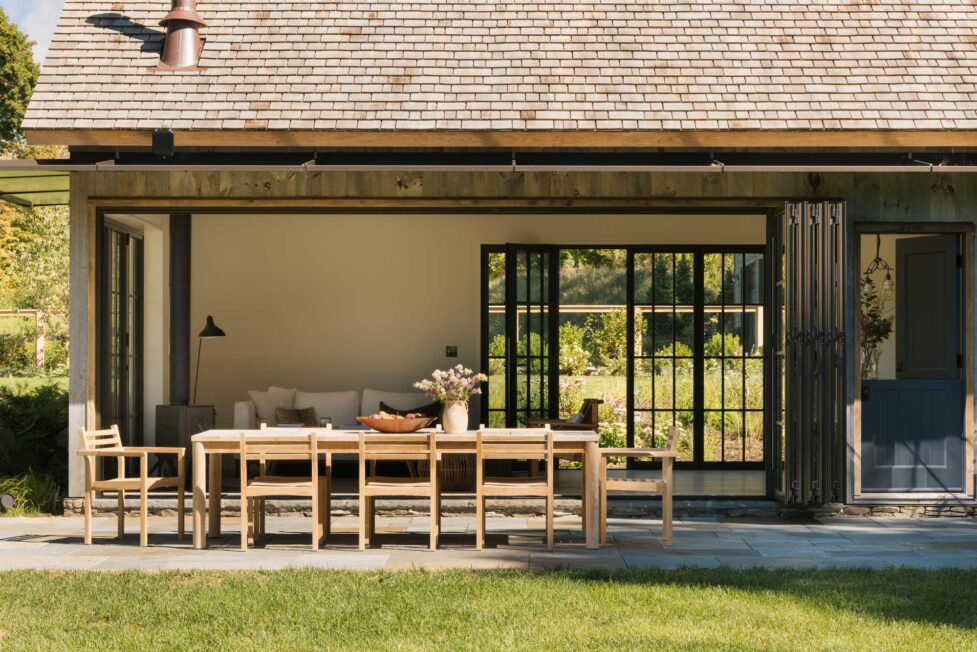
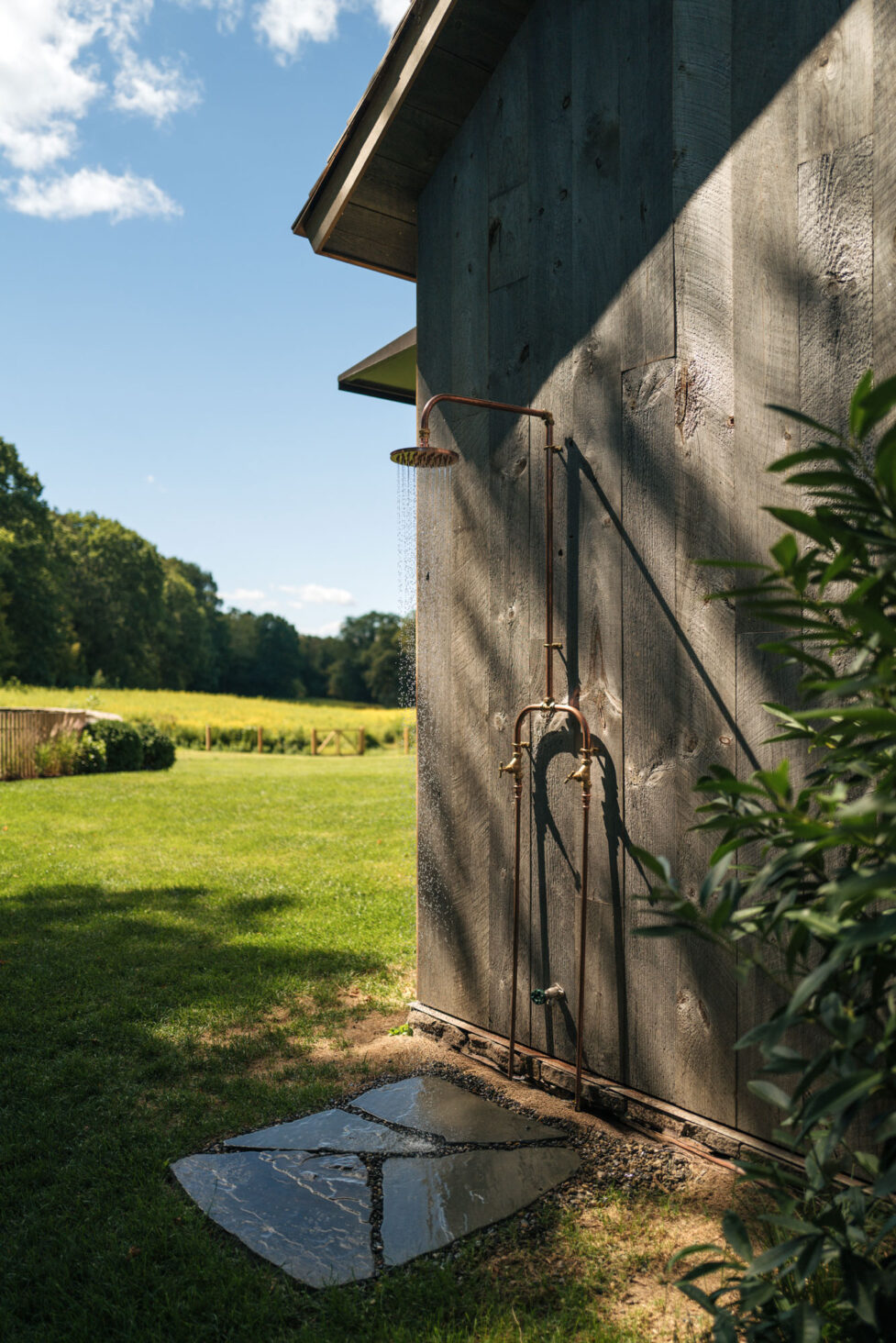
The guest house’s exterior draws inspiration from traditional local barns, expressed through a simple extruded gable form, weathered wood siding, cedar shingles, a large sliding barn door, and a foundation veneer of local stone. The intent was to create a secondary living structure that stands in deliberate contrast to the “modern farmhouse” character of the main house and garage. The site slopes gently downward from the primary residence, allowing the guest house to be nestled a few feet lower—a move that increases interior ceiling height while visually reducing its overall mass in relation to the house.
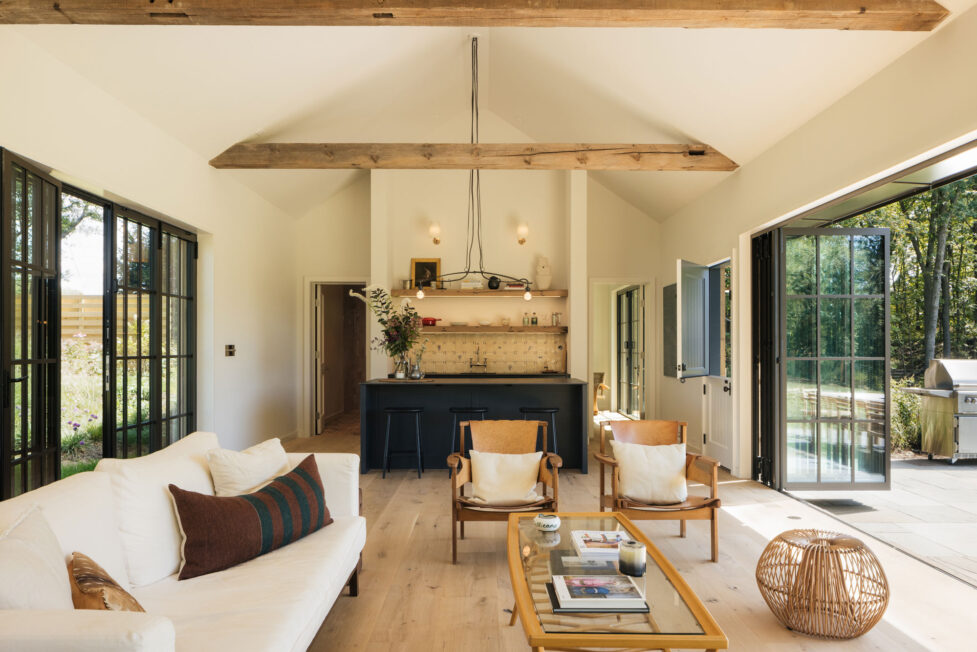
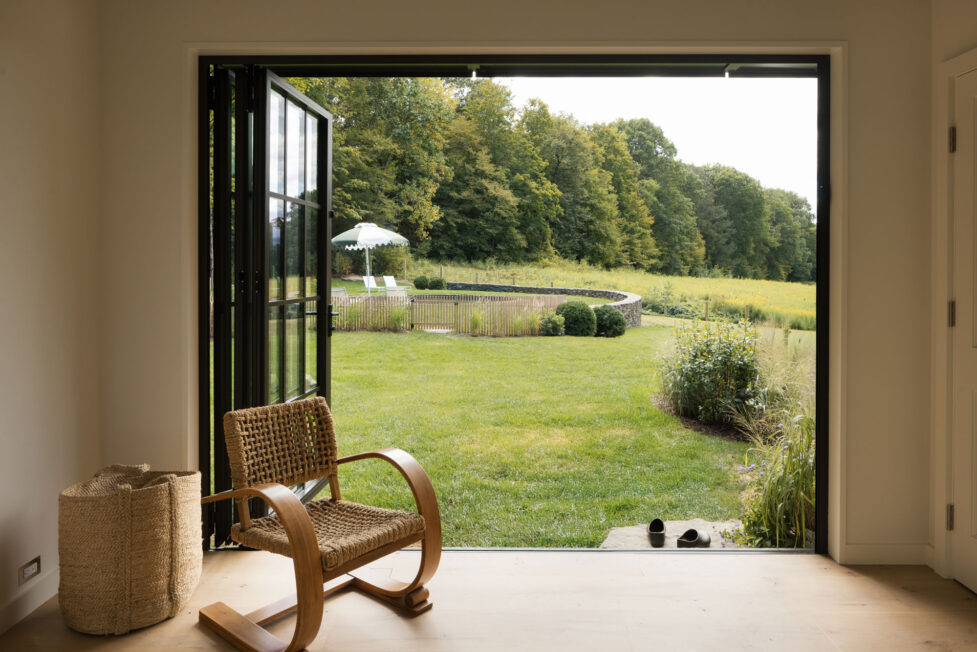
Designed for year-round use, the guest house follows a straightforward program consisting of one bedroom, a full bath, a compact kitchen, and a living area. When closed, the large barn door forms a quiet edge to the courtyard; when open, it strengthens the connection between inside and out, framing expansive views of the meadow and mountains beyond. This relationship is further enhanced through three large-scale bifold glass walls in the common areas, oriented to the south and west, and an additional bifold wall in the bedroom that similarly dissolves the boundary between interior and exterior. Subdivided window lites temper these thoroughly modern elements, allowing them to remain in harmony with the otherwise traditional material palette. A minimal awning—fabricated from thin metal panels and powder-coated to match the windows—wraps the south and west façades, providing protection from rain and the harshest sun angles.
Simplicity carries through to the interior, where understated finishes are enriched by tactile details such as reclaimed timber collar ties, stone surfaces, naturally patinated metal, and a cast-iron wood-burning stove. Custom hand-painted Delft tiles on the kitchen backsplash depict vignettes from the family’s life, while terracotta tiles in the bathroom evoke an Old World sensibility. Soaring ceilings and abundant daylight create a dynamic interplay of light and shadow that shifts with the seasons.
The landscape strategy is twofold. At the perimeter, carefully placed deciduous trees and mature evergreens form a naturalized green buffer, providing privacy while maintaining a sense of openness. Within this framework, plantings establish an “enhanced meadow” condition, allowing the new work to feel as though it emerges organically from the surrounding fields. A circular pool suggests a natural pond, while a minimalist fence is set well back to meet code requirements without disrupting the openness of the landscape. A stone ha-ha wall works in concert with a small picket fence softened by native grasses, offering an additional layer of safety for young children. Plantings around the pool are slightly more formal, creating a protective embrace along the eastern edge near the woods. To the north of the house, meadow plantings are interspersed with dogwoods, anchoring the landscape and providing shade as they crown the northern field.